Cerebellar Atlases
The functional atlases that came with the SUIT toolbox are now maintained separately in the cerebellar atlas repository.
You can download the repository into a folder of your choice, or use the SUITPy function suit.fetch_atlas() to download individual atlases on demand. For example, to download the Diedrichsen_2009 probabilistic atlas, you can run:
suit.fetch_atlas('Diedrichsen_2009')
For this command you can specify a atlas directory, specify the specific maps you want, and define the atlas space that you would like to use. For example, to download the symmetric, 32 parcel, Nettekoven_2024 atlas in SUIT space, you can run:
suit.fetch_atlas('Nettekoven_2024', maps='atl-NettekovenSym32',space='SUIT',atlas_dir=<your_dir>)
The atlases are downloaded into a target folder that is determined in order of priority by:
the keyword argument atlas_dir` to fetch_dir
the global environment variable SUITPy_ATLAS_DIR
cerebellar_atlases in the user home folder
Template spaces
We are providing the atlas and data maps in three template spaces. All three templates are provided in the tpl- directory in a cerebellar-only version.
MNI152NLin6AsymC: The non-linear asymmetric MNI template used for example in FSL (short MNI)MNI152NLin2009cSymC: The 2000c symmetric MNI template (short MNISym)SUIT: The original cerebellar-only template (Diedrichsen, 2005)
For every template space, we provide the following files:
.._T1w: T1-weighted template image.._desc-pcereb.nii: Probabilistic mask.._desc-cereb_mask.nii: hard mask.._xfm.nii: Transform files between different atlas spaces..label-GMc_probseg.nii: Gray matter probability..label-WMc_probseg.nii: White matter probability
Atlases
For every map, we provide some the following files:
..._space-MNI.nii: volume file aligned to MNI152NLin6AsymC..._space-MNISym.nii: volume file aligned to MNI152NLin2009cSymC..._space-SUIT.nii: volume file aligned to SUIT space...tsv: Color and label lookup table for parcellation...lut: Color and label lookup table for FSLeyes...gii: Data projected to surface-based representation of the cerebellum (Diedrichsen & Zotow, 2015).
The atlases are organized by the first author / year of the main paper
The maps can also be viewed online using our cerebellar atlas viewer.
Summarizing data within ROIs
Atlases are especially useful for an ROI-based analysis. To quickly summarize any set of images in SUIT-space, you can use the function suit.summarize_data with a specific atlas. For example to calculate the mean activity in a specific ROI:
image_file = 'sub-ex_task-fingerseq_space-SUIT.nii.gz'
df = suit.summarize_data(
    images=[image_file],
    atlas="Nettekoven_2024",
    maps="atl-NettekovenSym32",
    space="SUIT",
    stats=(["nanmean"]),
    outfilename=None)
print(df.head())
Diedrichsen_2009: Probabilistic atlas for cerebellar lobules and nuclei
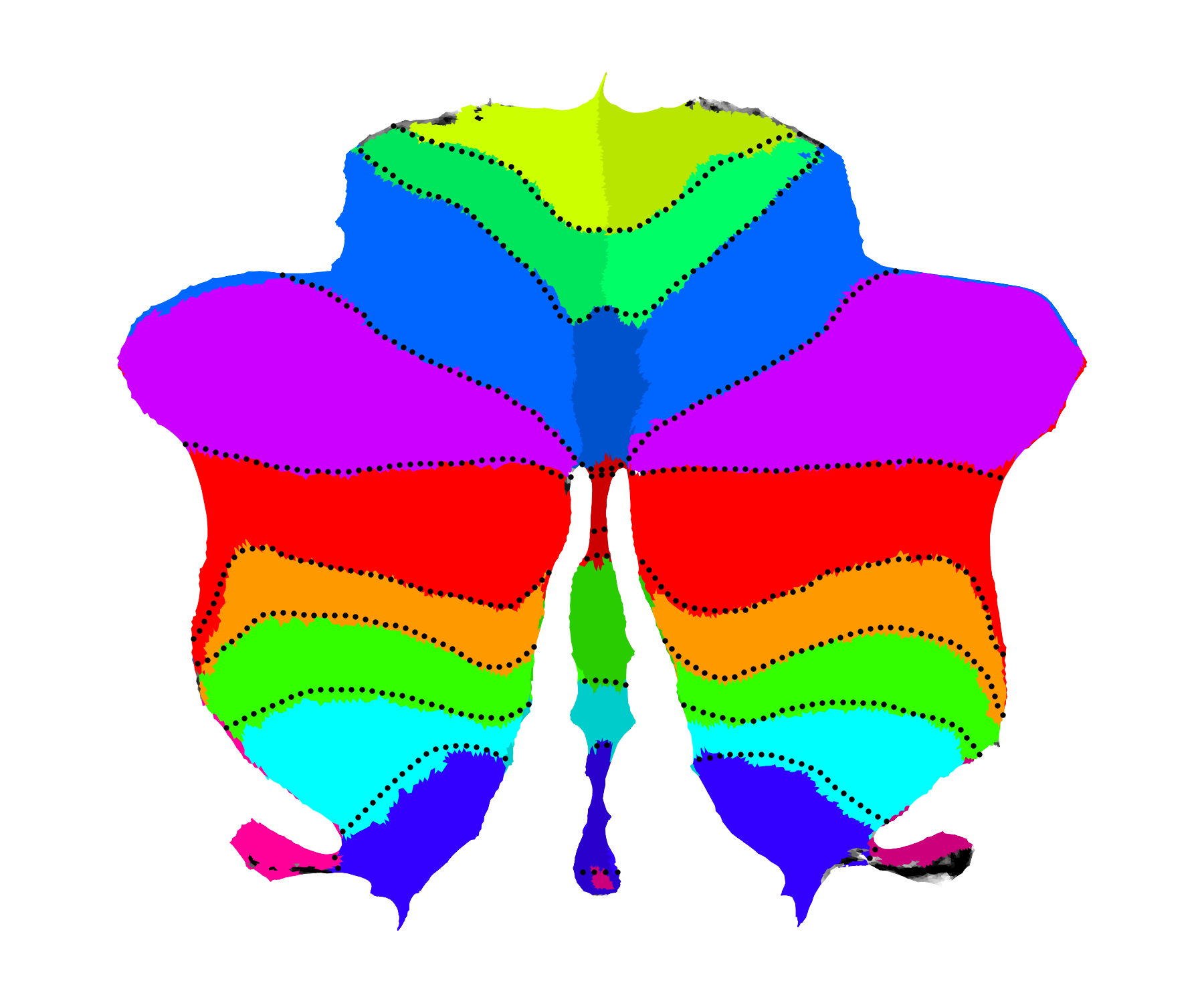
The anatomical definitions are based on the fMRI atlas of an individual cerebellum by Schmahmann et al. (2000). We manually identified the main lobules on MRI scans of 20 healthy young participants (ROIs 1-28). Using a different set of 23 participants, we also identified the deep cerebellar nuclei (ROIs 29-34).
- Included maps:
atl-Anatom: Number of most probable compartment, Lobules and Nuclei
- References and Links:
Diedrichsen, J., Balsters, J. H., Flavell, J., Cussans, E., & Ramnani, N. (2009). A probabilistic atlas of the human cerebellum. Neuroimage.
Diedrichsen, J., Maderwald, S., Kuper, M., Thurling, M., Rabe, K., Gizewski, E. R., et al. (2011). Imaging the deep cerebellar nuclei: A probabilistic atlas and normalization procedure. Neuroimage.
Buckner_2011: Resting state network parcellation
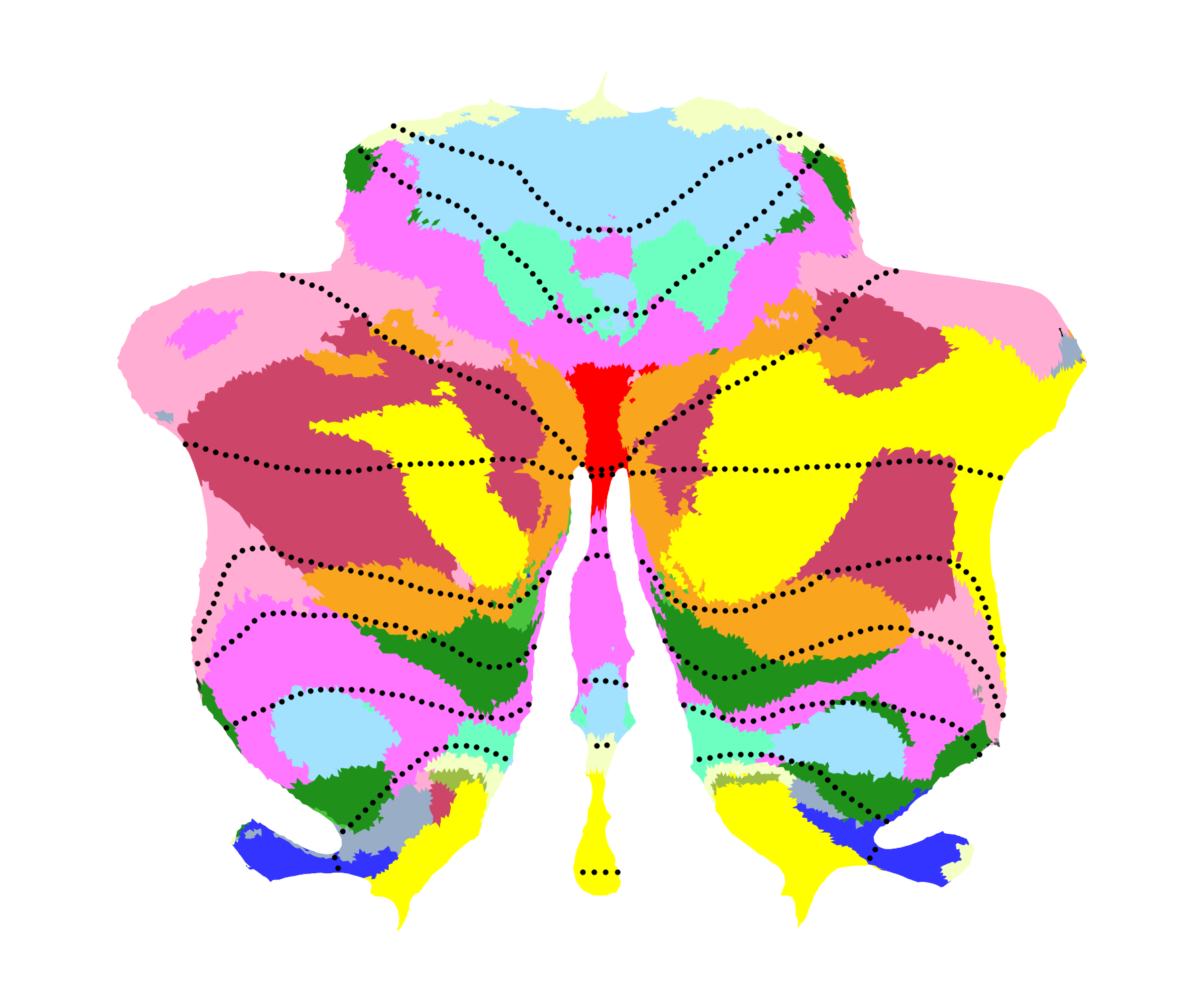
Buckner et al. (2011) presented the first comprehensive functional atlas of the human cerebellum, based on the correlation of each cerebellar voxel and with the 7 or 17 cortical resting state networks, described in Yeo et al. Parcellation is based on the data from 1000 subjects.
- Included maps:
atl-Buckner7: Assignment of cerebellar voxels to the 7 network parcellation
atl-Buckner17: Assignment of cerebellar voxels to the 17 network parcellation
- References and Links:
Buckner, R. L., Krienen, F. M., Castellanos, A., Diaz, J. C. & Yeo, B. T. (2011). The organization of the human cerebellum estimated by intrinsic functional connectivity. J Neurophysiol 106, 2322–2345.
Xue_2021: Individual resting state parcellation
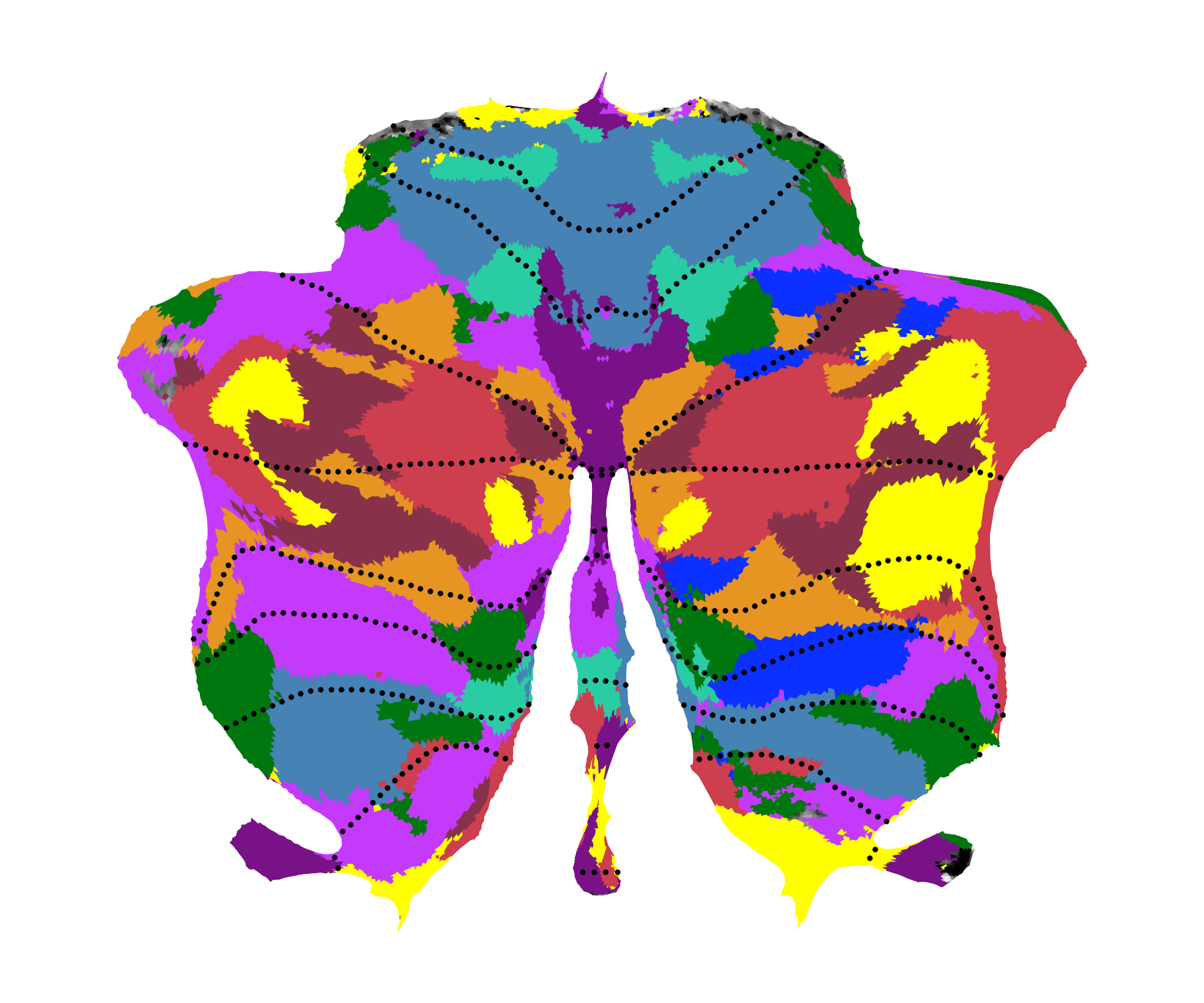
Xue et al. (2021) provided two individual parcellations based on resting state data from 31 sessions for each. 10 Cortical networks were estimated using a hierarchical Bayesian model (Kong et al. 2019) and the cerebellum labeled based on the highest correlation with these networks.
- Included maps:
atl-Xue10Sub1: Individual parcellation for subject 1
atl-Xue10Sub2: Individual parcellation for subject 2
- References and Links:
Xue, A., Kong, R., Yang, Q., Eldaief, M. C., Angeli, P. A., Dinicola, L. M., … Yeo, B. T. T. (2021). The detailed organization of the human cerebellum estimated by intrinsic functional connectivity within the individual. https://doi.org/10.1152/jn.00561.2020
Ji_2019: Subcortical resting state parcellation
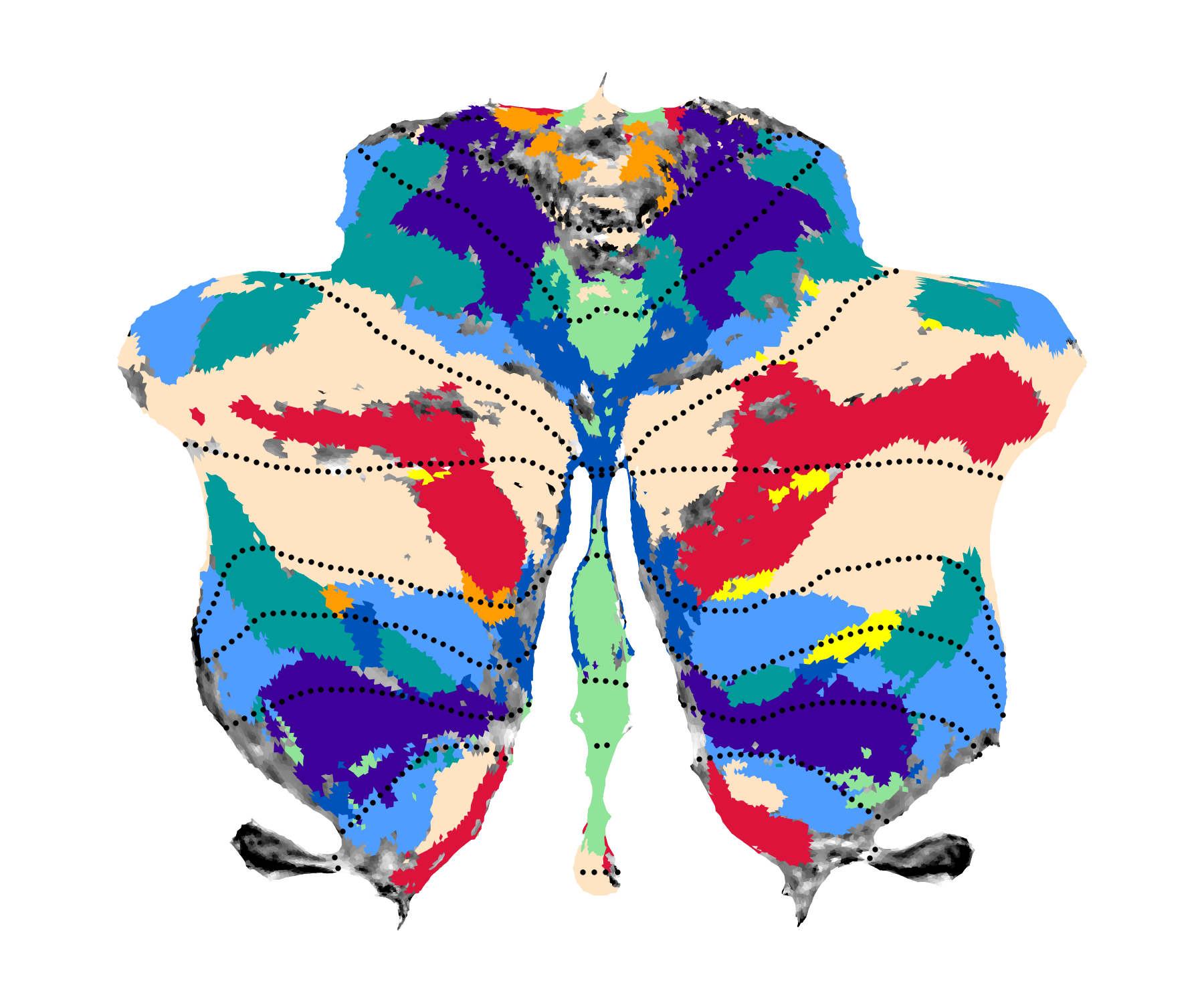
Ji et al. (2019) presented a parcellation of subcortical structures based on correlation with 10 cortical networks, based on the HCP resting state data.
- Included maps:
atl-Ji10: Subcortical resting state parcellation in 10 networks
- References and Links:
Ji, J. L., Spronk, M., Kulkarni, K., Repovš, G., Anticevic, A., & Cole, M. W. (2019). Mapping the human brain’s cortical-subcortical functional network organization. Neuroimage, 185, 35-57.
King_2019:Multi-domain task battery (MDTB) parcellation and contrast maps
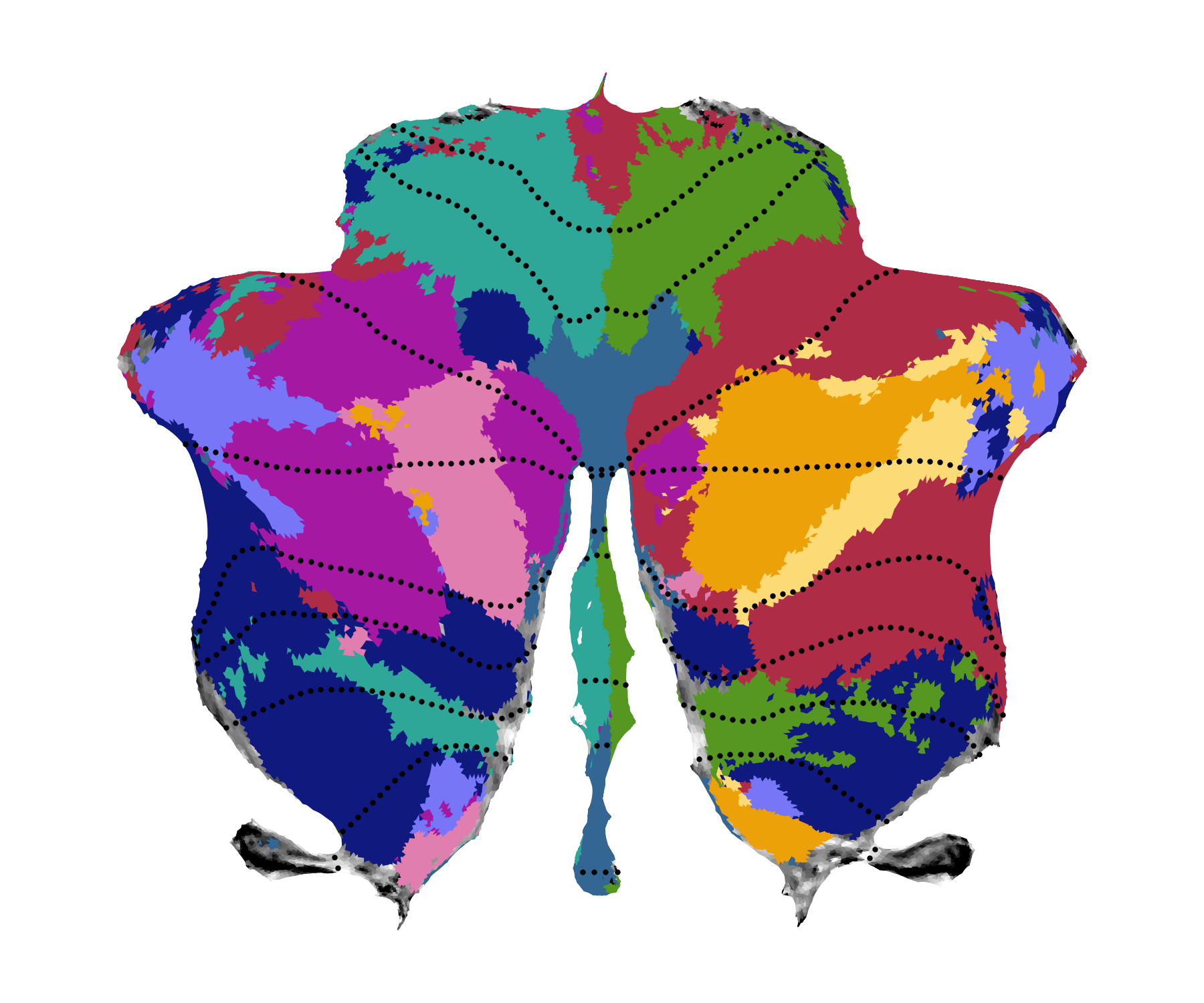
King et al. (2019) provided an extensive characterization of the functional organization of the cerebellum of 24 healthy, young participants. The contrast are for for 47 task conditions, accounted for the activity caused by left hand, right hand, and eye movements. All contrast maps are relative to the mean activity across all tasks. The parcellation into 10 regions is defined from the task-evoked activity across all tasks.
- Included maps:
atl-MDTB10: MDTB parcellation into 10 regions
con-MDTB01LeftHandMovement: Activity across tasks accounted for by left hand movements
con-MDTB02RightHandMovement: Activity across tasks accounted for by right hand movements
con-MDTB03Saccades: Activity across tasks accounted for by saccadic eye movements
con-MDTB04NoGo: Go-Nogo task with words: No-go
con-MDTB05Go: Go-Nogo task with words: go
con-MDTB06TheoryOfMind: 2 AFC task to indicate if a short story contains true or false belief
con-MDTB07ActionObservation: Passive viewing of knots being tied
con-MDTB08VideoKnots: Passive viewing of static knots
con-MDTB09UnpleasantScenes: IAPS affective pictures: Unpleasant scenes
con-MDTB10PleasantScenes: IAPS affective pictures: Pleasant scenes
con-MDTB11Math: Simple multiplication equations: Judge true or false
con-MDTB12DigitJudgement: Control task for Math: detect 1 within 4 digits
con-MDTB13ObjectViewing: Passive viewing of objects or checkerboard patterns
con-MDTB14SadFaces: IAPS affective pictures: Sad facial expressions
con-MDTB15HappyFaces: IAPS affective pictures: Happy facial expressions
con-MDTB16IntervalTiming: Auditory temporal judgement task between short (100ms) and long (175ms)
con-MDTB17MotorImagery: Imagine playing a game of tennis
con-MDTB18FingerSimple: Series of six simple key presses of same finger
con-MDTB19FingerSequence: Bimanual sequence of six key press
con-MDTB20Verbal2Back-: Working memory 2-back task with words: no target
con-MDTB21Verbal2Back+: Working memory 2-back task with words: target
con-MDTB22Object2Back-: Working memory 2-back task with pictures: no target
con-MDTB23Object2Back+: Working memory 2-back task with pictures: target
con-MDTB24SpatialImagery: Imagine to walk from kitchen to bathroom in your childhood home
con-MDTB25StroopIncongruent: Stroop task: Incongruent trials
con-MDTB26StroopCongruent: Stroop task: Congruent trials
con-MDTB27VerbGeneration: Generate a verb for a displayed noun (dog->bark)
con-MDTB28WordReading: Read the displayed noun: control for verb generation
con-MDTB29VisualSearchSmall: Find a target (‘T’) among distractors (‘L’): 4 items
con-MDTB30VisualSearchMedium: Find a target (‘T’) among distractors (‘L’): 8 items
con-MDTB31VisualSearchLarge: Find a target (‘T’) among distractors (‘L’): 12 items
con-MDTB32Rest: Passive viewing of fixation cross
con-MDTB33CPRO: Concrete Permuted Rules Operations: Apply set of rules to 2 stimuli
con-MDTB34PredictionTrue: Predicting the end of a sequentially presented sentence: fulfilled prediction
con-MDTB35PredictionViolated: Predicting the end of a sequentially presented sentence: violated prediction
con-MDTB36PredictionScrambles: Predicting the end of a sequentially presented sentence: scrambled sentence
con-MDTB37SpatialMapEasy: Memorize a spatial map of numbers for subsequent recall: 1 item
con-MDTB38SpatialMapMedium: Memorize a spatial map of numbers for subsequent recall: 4 items
con-MDTB39SpatialMapHard: Memorize a spatial map of numbers for subsequent recall: 7 items
con-MDTB40NatureMovie: Passive viewing of “Planet Earth II: Islands” movie: Animal movements
con-MDTB41AnimatedMovie: Passive viewing of “Up” pixar movie: Social interactions
con-MDTB42LandscapeMovie: Passive viewing of movie: Landscape scenes
con-MDTB43MentalRotationEasy: Mental rotation task between two objects: 0 degrees
con-MDTB44MentalRotationMedium: Mental rotation task between two objects: 50 degrees
con-MDTB45MentalRotationHard: Mental rotation task between two objects: 150 degrees
con-MDTB46BiologicalMotion: Point light walker: Judge whether gait is happy or sad
con-MDTB47ScrambledMotion: Point light walker: Judge whether scrambled control stimulus moves fast or slow
con-MDTB48ResponseAlternativesEasy: Execute fast keypress to imparative signal: 1 cued position
con-MDTB49ResponseAlternativesMedium: Execute fast keypress to imparative signal: 2 cued positions
con-MDTB50ResponseAlternativesHard: Execute fast keypress to imparative signal: 4 cued position
- References and Links:
King, M., Hernandez-Castillo, C.R., Poldrack, R.R., Ivry, R., and Diedrichsen, J. (2019). Functional Boundaries in the Human Cerebellum revealed by a Multi-Domain Task Battery. Nat. Neurosci.
Nettekoven_2024: Hierarchical functional cerebellar atlas data fusion
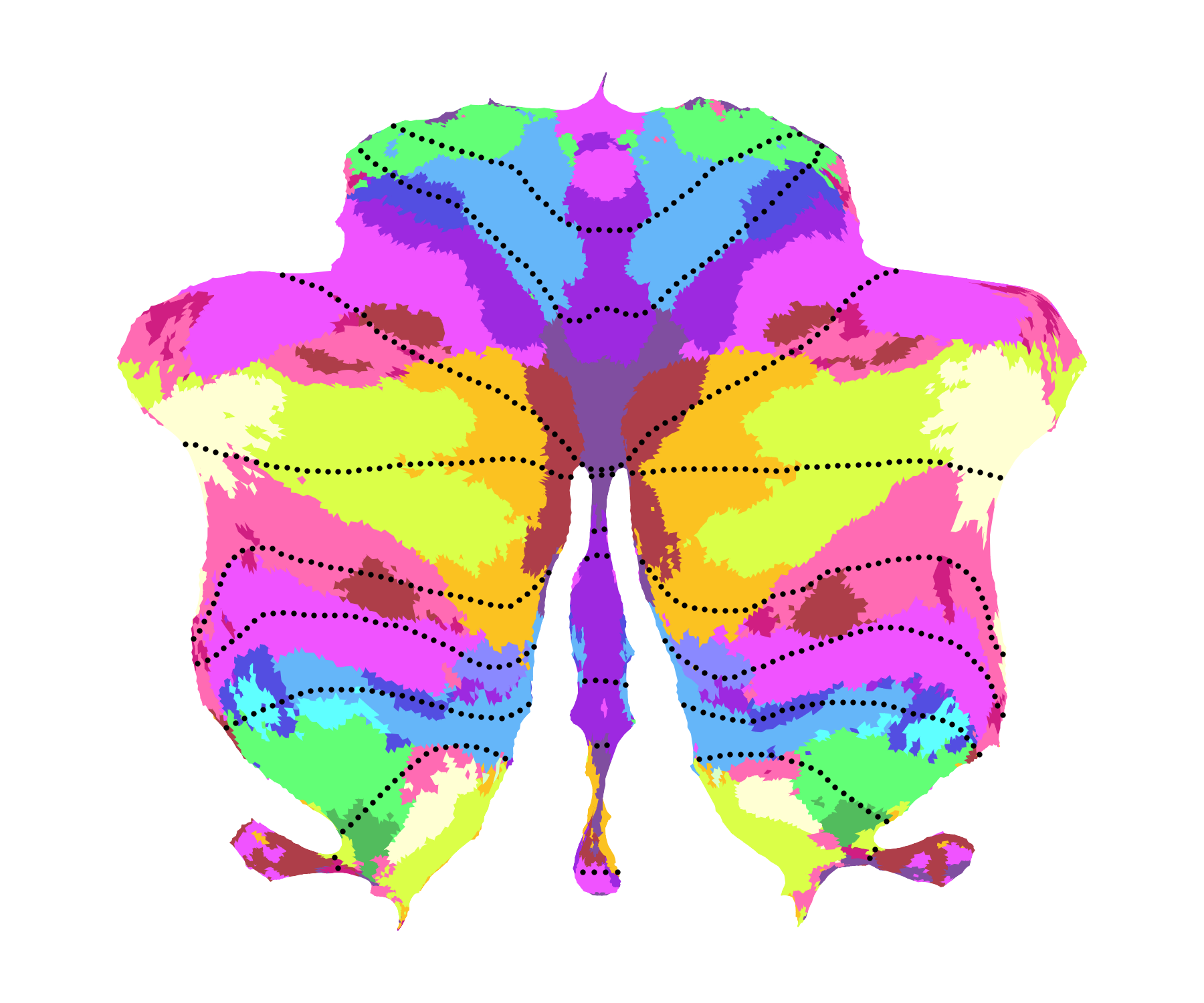
Functional parcellation into 4 domains, 32 regions or 68 functional subregions (symmetric or asymmetric). Domains, regions, and subregions are a nested hierarchy. An additional version with 128 regions that subdivides the 32 regions spatially into 4 regions (s: superior, i: inferior, t: tertiary, v: vermal) is available. The maps are based on the probabilistic integration of 7 task-based datasets. The color scheme reflects the functional similarity of different regions. The parcellations are organized to have corresponding left and right hemispheric regions. For the symmetric version, the boundaries are force to be identical across hemispheres.
- Included maps:
atl-NettekovenSym32: Symmetric 32-region parcellation
atl-NettekovenAsym32: Asymmetric 32-region parcellation
atl-NettekovenSym68: Symmetric 68-region parcellation (functional subregions)
atl-NettekovenAsym68: Asymmetric 68-region parcellation (functional subregions)
atl-NettekovenSym128: Symmetric 128-region parcellation (spatial subregions)
atl-NettekovenAsym128: Asymmetric 128-region parcellation (spatial subregions)
- References and Links:
Nettekoven, C. et al. A hierarchical atlas of the human cerebellum for functional precision mapping. Nature Communications (2024).